Simplify your dinner
reservation experience
Simplify your dinner
reservation experience
This OpenTable re-skin will help you manage your reservations easier than before. The app brings more focus on usability and functionality with an updated look & feel.
This OpenTable re-skin will help you manage your reservations easier than before. The app brings more focus on usability and functionality with an updated look & feel.
This OpenTable re-skin will help you manage your reservations easier than before. The app brings more focus on usability and functionality with an updated look & feel.
My Role
Solo Product Designer
My Role
Solo Product Designer
My Role
Solo Product Designer
Responsibilities
Research, Ideation, Wire Frames,
High Fidelity Prototyping
Responsibilities
Research, Ideation, Wire Frames,
High Fidelity Prototyping
Responsibilities
Research, Ideation, Wire Frames,
High Fidelity Prototyping


Explorations
Practice!
Practice!
Learn new tools :)
Learn new tools :)
Master IOS Design Principals (<>)
Master IOS Design Principals (<>)
I set out to re-design an app I frequently use: While using OpenTable, I noticed several issues with the current UI and discovered correlations explaining why OpenTable is no longer the reservation platform of choice. For most users, Google search has become the more logical path to making restaurant reservations, highlighting the need for OpenTable to evolve to remain competitive.
I set out to re-design an app I frequently use: While using OpenTable, I noticed several issues with the current UI and discovered correlations explaining why OpenTable is no longer the reservation platform of choice. For most users, Google search has become the more logical path to making restaurant reservations, highlighting the need for OpenTable to evolve to remain competitive.
I set out to re-design an app I frequently use: While using OpenTable, I noticed several issues with the current UI and discovered correlations explaining why they are no longer the reservation platform of choice. For most users, Google search has become the more logical path to making restaurant reservations, highlighting the need for OpenTable to evolve to remain competitive.
Project Goals
Project Goals
Create awareness about points and perks associated.
Create awareness about points and perks associated.
To re-skin the application in order to retain users
To re-skin the application in order to retain users
Encourage / motivate users to use OPTB as their primary option
Encourage / motivate users to use OPTB as their primary option
Project Goals
Create awareness about points and perks associated.
To re-skin the application in order to retain users
Encourage / motivate users to use OPTB as their primary option
The Purpose of this project
The Purpose of this Project
Why?
The Purpose of this Project
Could the reservation process allow users to select table preferences (round, square, patio, sidewalk seating)?
Implement reservation sharing functionality to coordinate with dining groups?
OpenTable's review system sees minimal engagement - could Google reviews integration enhance decision-making?
Users currently navigate between multiple apps when choosing restaurants, could consolidating functions reduce friction?
Would a dark mode option improve navigation and reduce visual complexity while aligning with modern UI expectations?
Allow users to connect with their peers, to share reservations or split the cheque
Final Flow
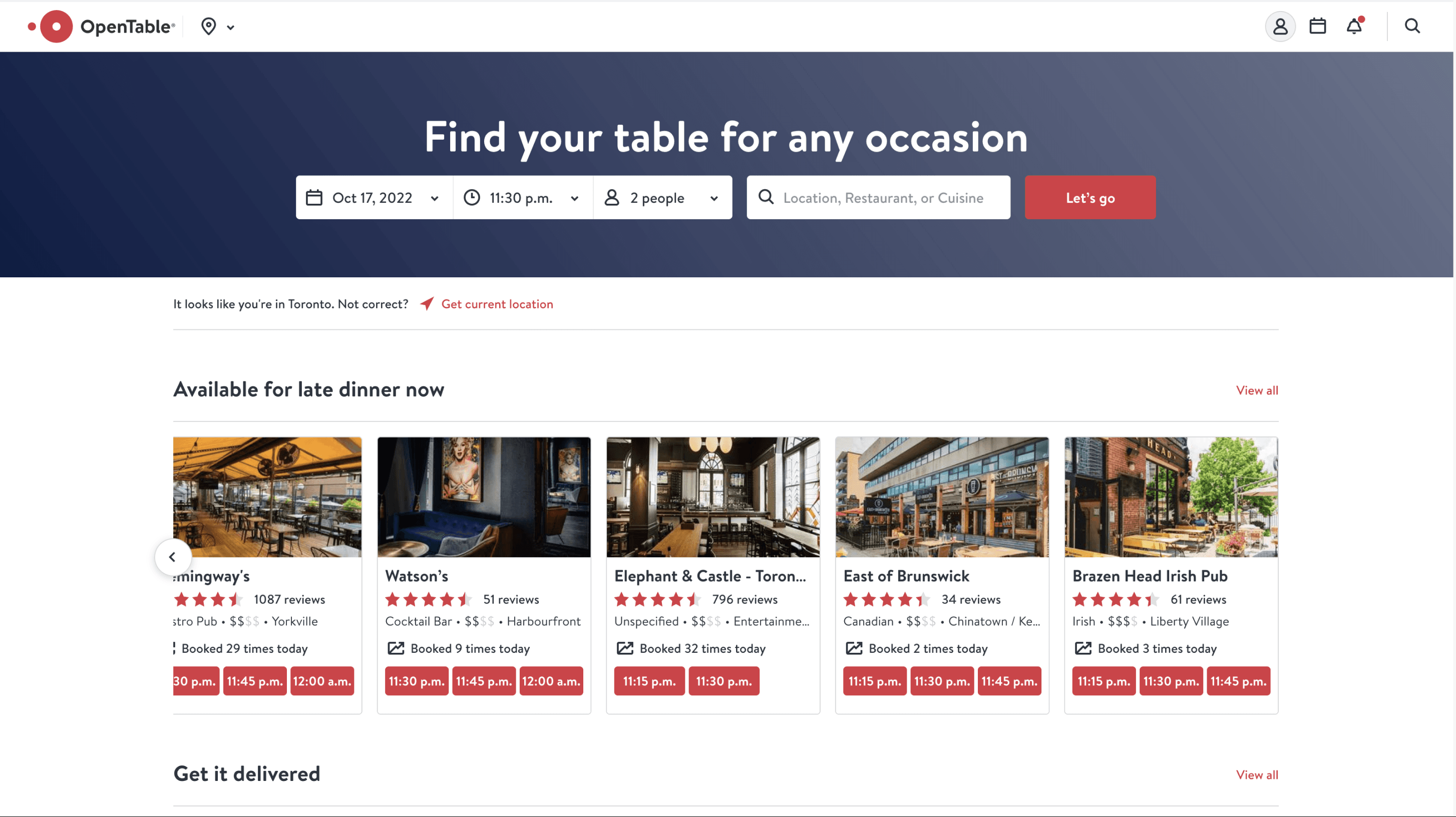
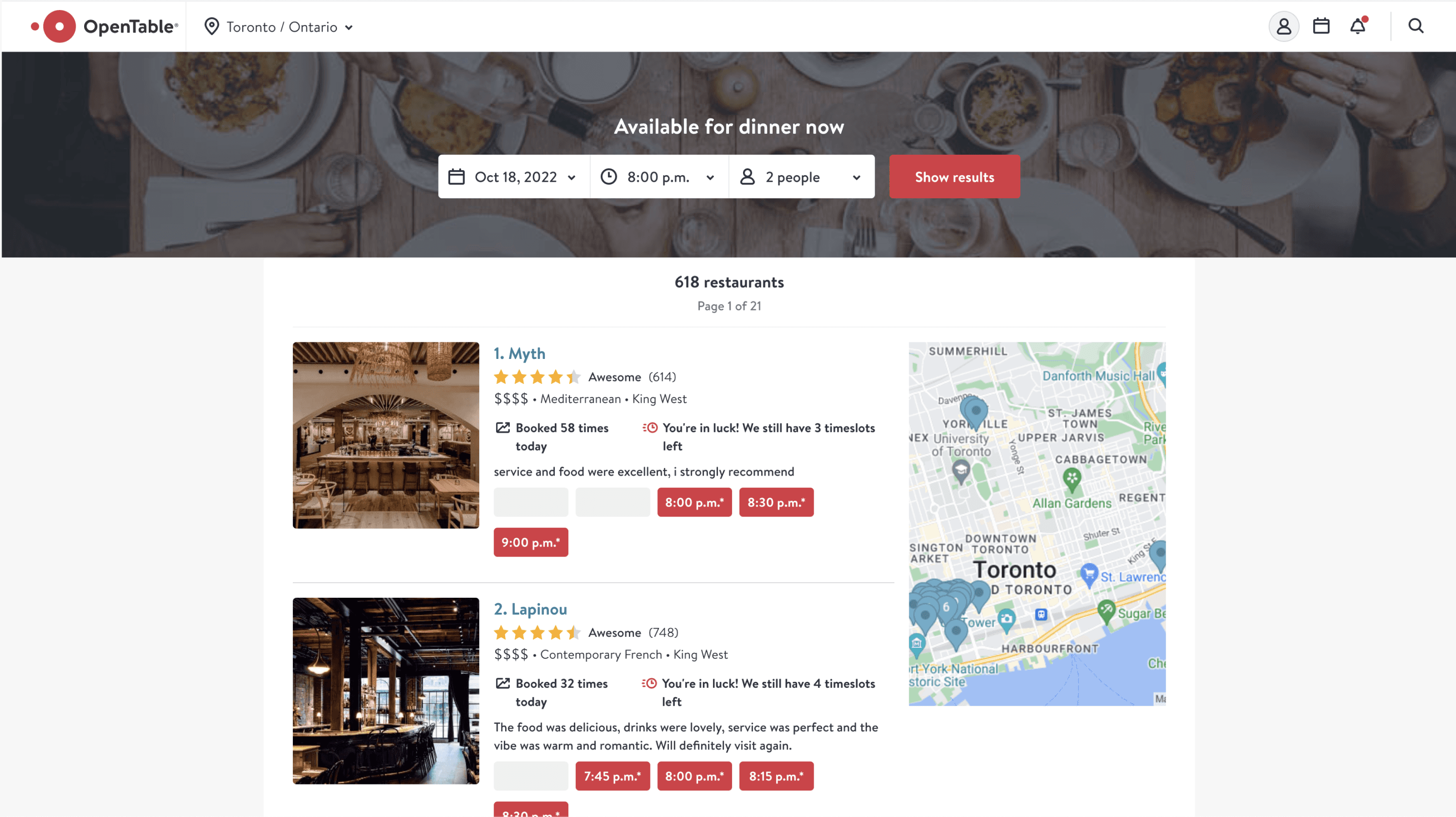
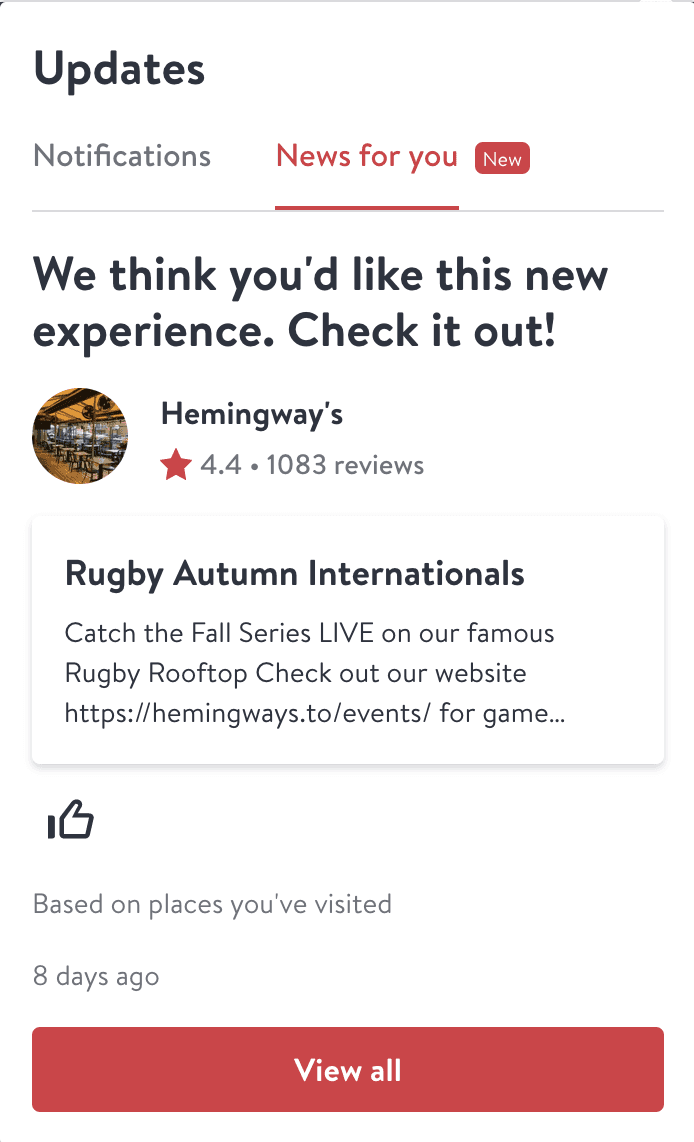
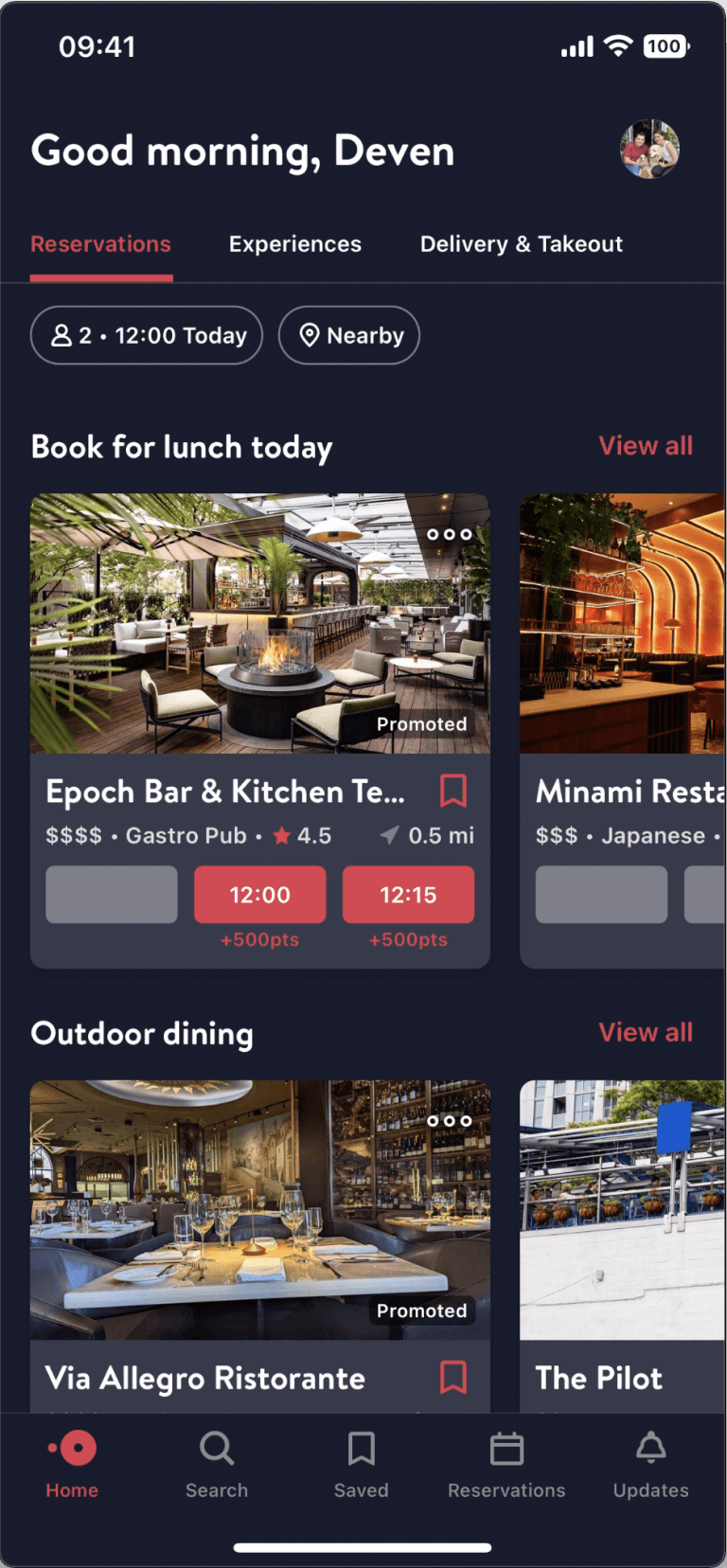
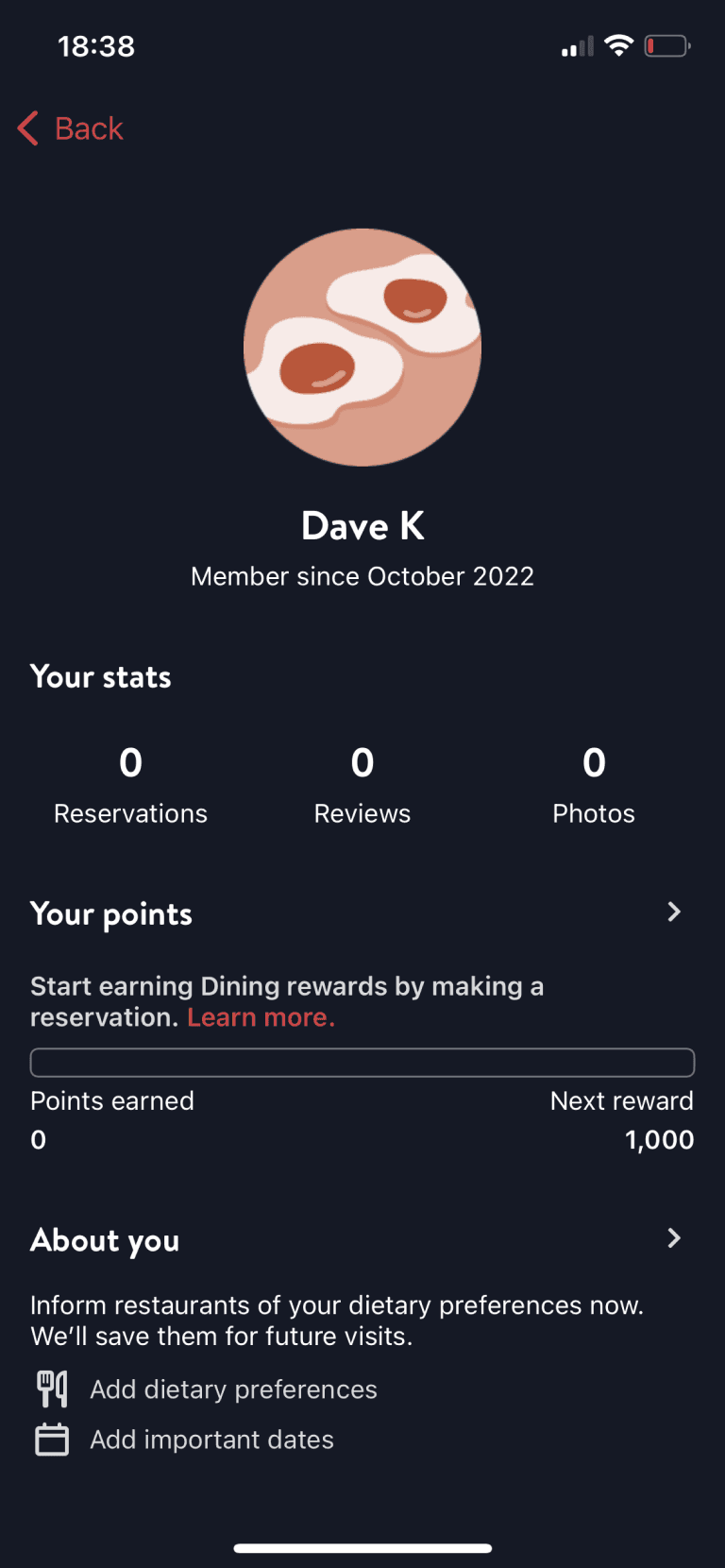
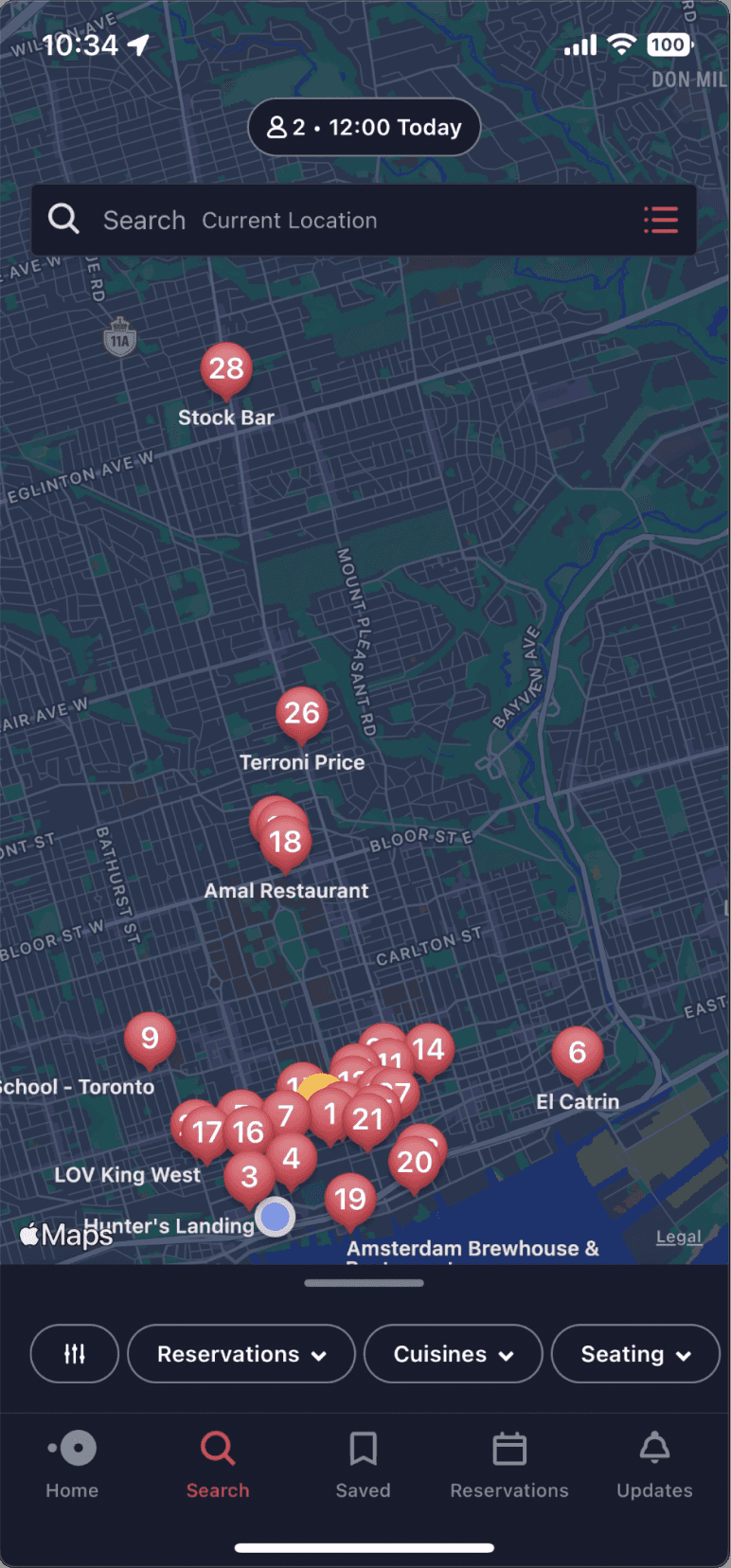
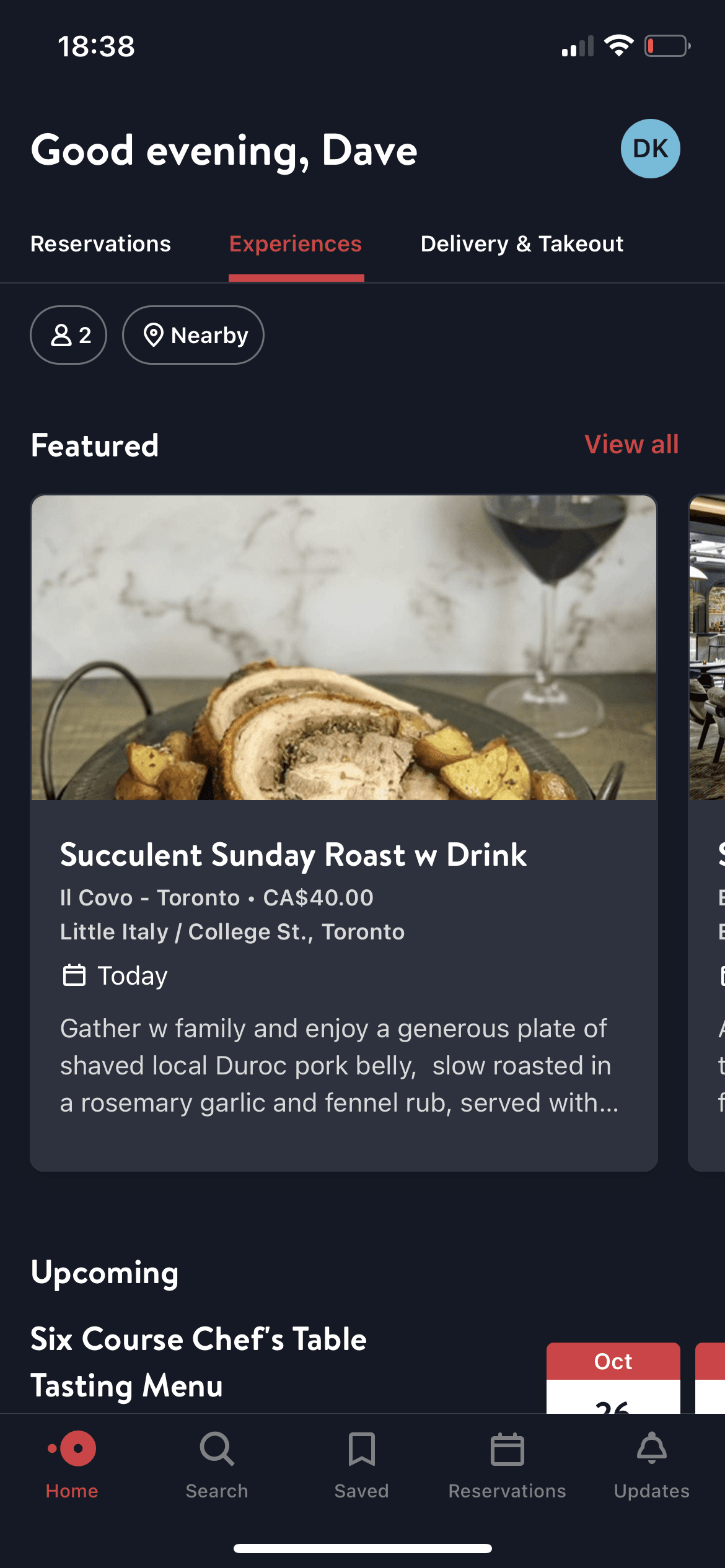
The current interface needs a cleaner, more streamlined approach, while information blocks could benefit from better proportions and restructuring for easier navigation.
The current interface needs a cleaner, more streamlined approach, while information blocks could benefit from better proportions and restructuring for easier navigation.
The current interface needs a cleaner, more streamlined approach, while information blocks could benefit from better proportions and restructuring for easier navigation.
The experience stays exactly the same for returning users and members, offering no personalization to make frequent users feel valued.
The current interface needs a cleaner, more streamlined approach, while information blocks could benefit from better proportions and restructuring for easier navigation.
The experience stays exactly the same for returning users and members, offering no personalization to make frequent users feel valued.
Several modal interfaces require significant refinement to improve clarity and usability, as they currently disrupt the user flow and create unnecessary friction points.
Several modal interfaces require significant refinement to improve clarity and usability, as they currently disrupt the user flow and create unnecessary friction points.
Navigation is intuitive but text readability suffers in dark mode, while inconsistent spacing creates visual imbalance.
Navigation is intuitive but text readability suffers in dark mode, while inconsistent spacing creates visual imbalance.
The interactive map legend effectively visualizes dining options yet becomes problematic in high-density areas where clustering hinders restaurant identification.
The interactive map legend effectively visualizes dining options yet becomes problematic in high-density areas where clustering hinders restaurant identification.
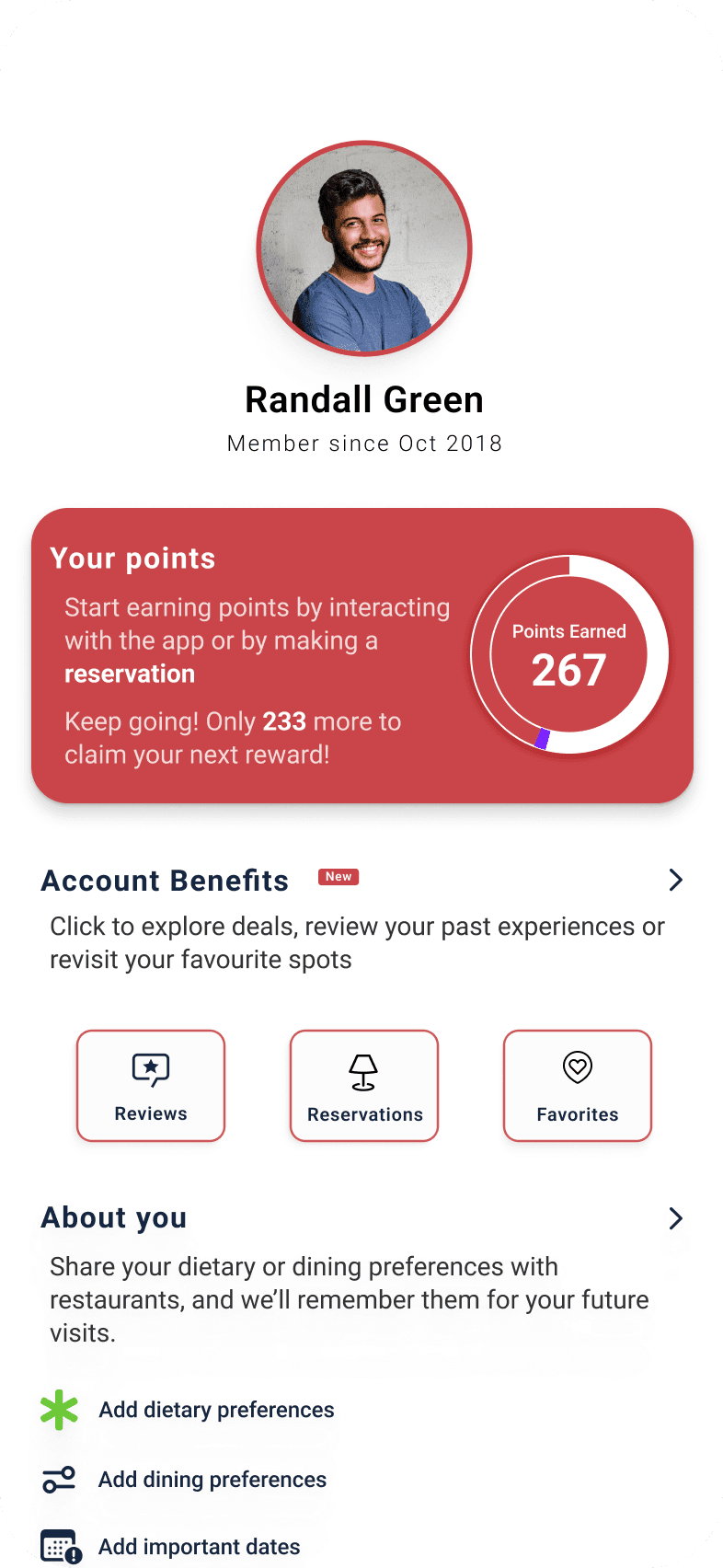
The user profile screen presents a cluttered hierarchy, with member credentials better served as quality-based ratings instead of tenure indicators.
The user profile screen presents a cluttered hierarchy, with member credentials better served as quality-based ratings instead of tenure indicators.
Could the reservation process allow users to select table preferences (round, square, patio, sidewalk seating)?
Could the reservation process allow users to select table preferences (round, square, patio, sidewalk seating)?
Implement reservation sharing functionality to coordinate with dining groups?
Implement reservation sharing functionality to coordinate with dining groups?
OpenTable's review system sees minimal engagement - could Google reviews integration enhance decision-making?
OpenTable's review system sees minimal engagement - could Google reviews integration enhance decision-making?
Users currently navigate between multiple apps when choosing restaurants, could consolidating functions reduce friction?
Users currently navigate between multiple apps when choosing restaurants, could consolidating functions reduce friction?
Would a dark mode option improve navigation and reduce visual complexity while aligning with modern UI expectations?
Would a dark mode option improve navigation and reduce visual complexity while aligning with modern UI expectations?
Allow users to connect with their peers, to share reservations or split the cheque
Allow users to connect with their peers, to share reservations or split the cheque
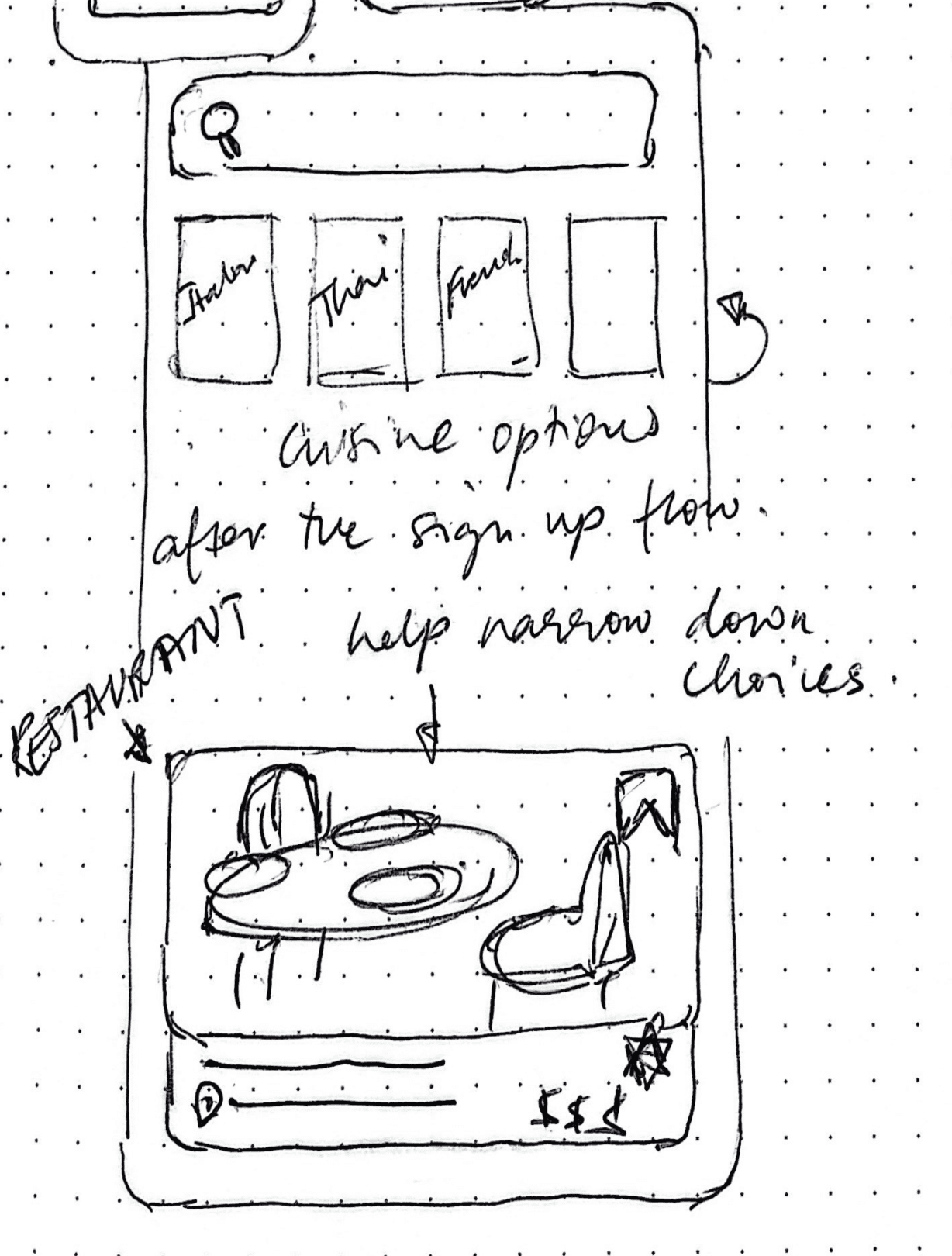
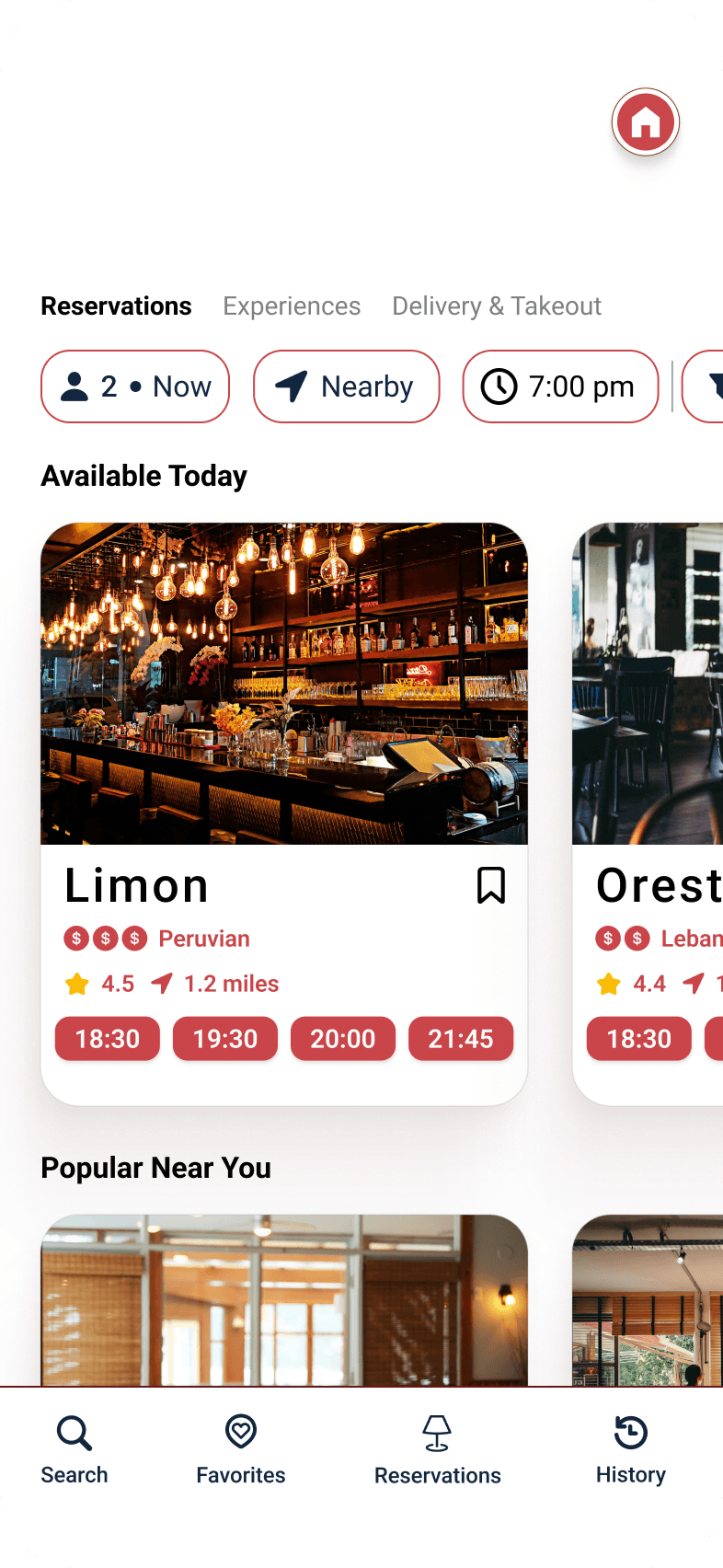
I thought it would make sense to lay out the restaurants in bite-sized pieces in widgets that contain all the important information about each spot.
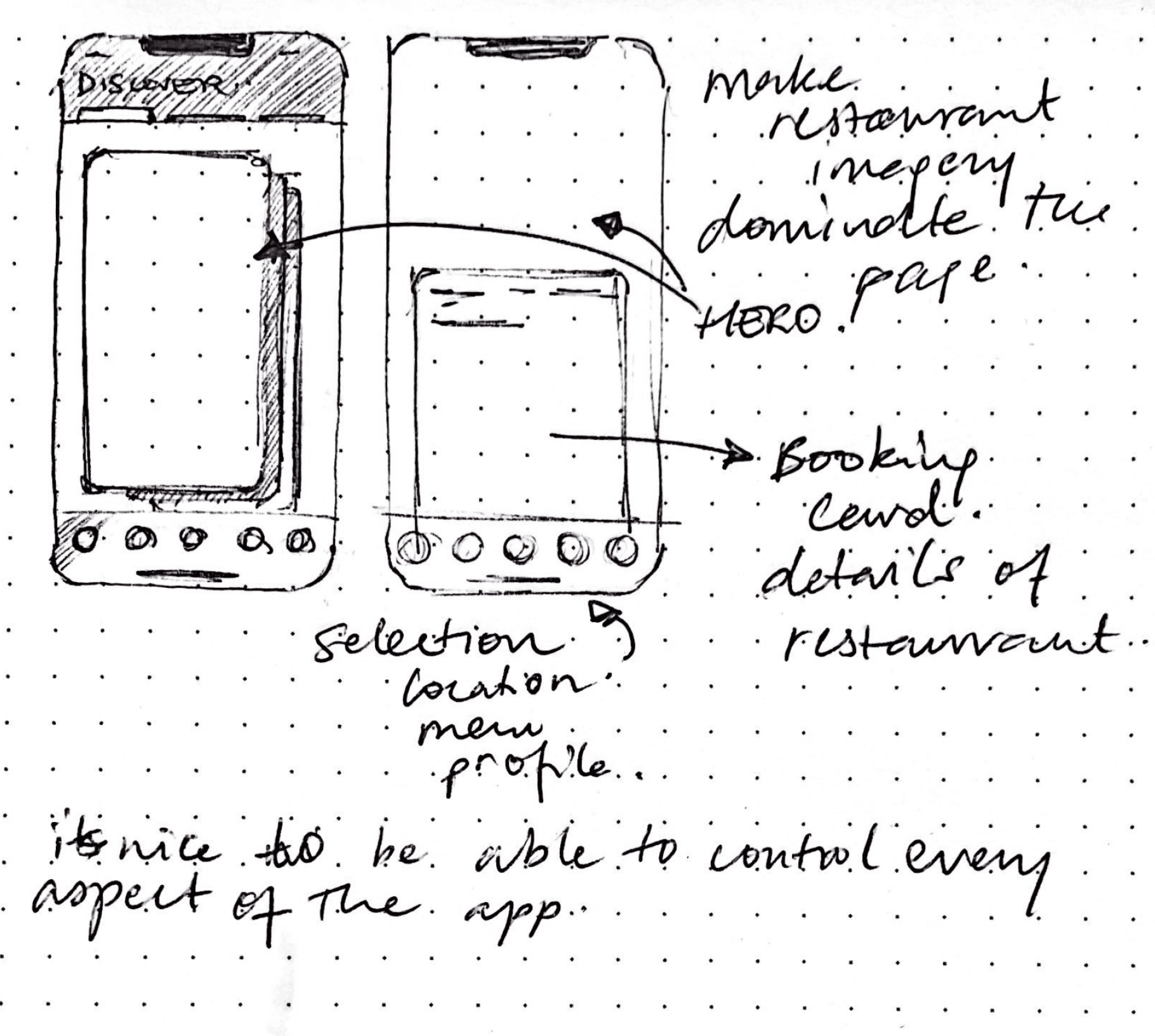
Having a navigation bar at the bottom of the screen allows users to switch between favorites, preferences, or different parts of the app, making it easier for them to find what they need.
Having a navigation bar at the bottom of the screen allows users to switch between favorites, preferences, or different parts of the app, making it easier for them to find what they need.
Giving customers the option to select their preferred table type motivates restaurants to elevate their service standards significantly.
Giving customers the option to select their preferred table type motivates restaurants to elevate their service standards significantly.
Giving customers the option to select their preferred table type motivates restaurants to elevate their service standards significantly.
Curated Discovery Experience
Curated Discovery Experience
Quick Access Menu
Quick Access Menu
Table Selection Experience
Table Selection Experience
Personalized Dining Profiles
Personalized Dining Profiles
I thought it would make sense to lay out the restaurants in bite-sized pieces in widgets that contain all the important information about each spot.
I thought it would be helpful to let users set their preferences in the profile tab. This way, the app can recommend restaurants that better match their expectations, reducing the need to scroll through irrelevant options.
Current Version Analysis
Current Version Analysis
Current Version Analysis
Possible Solutions
Possible Solutions
Possible Solutions
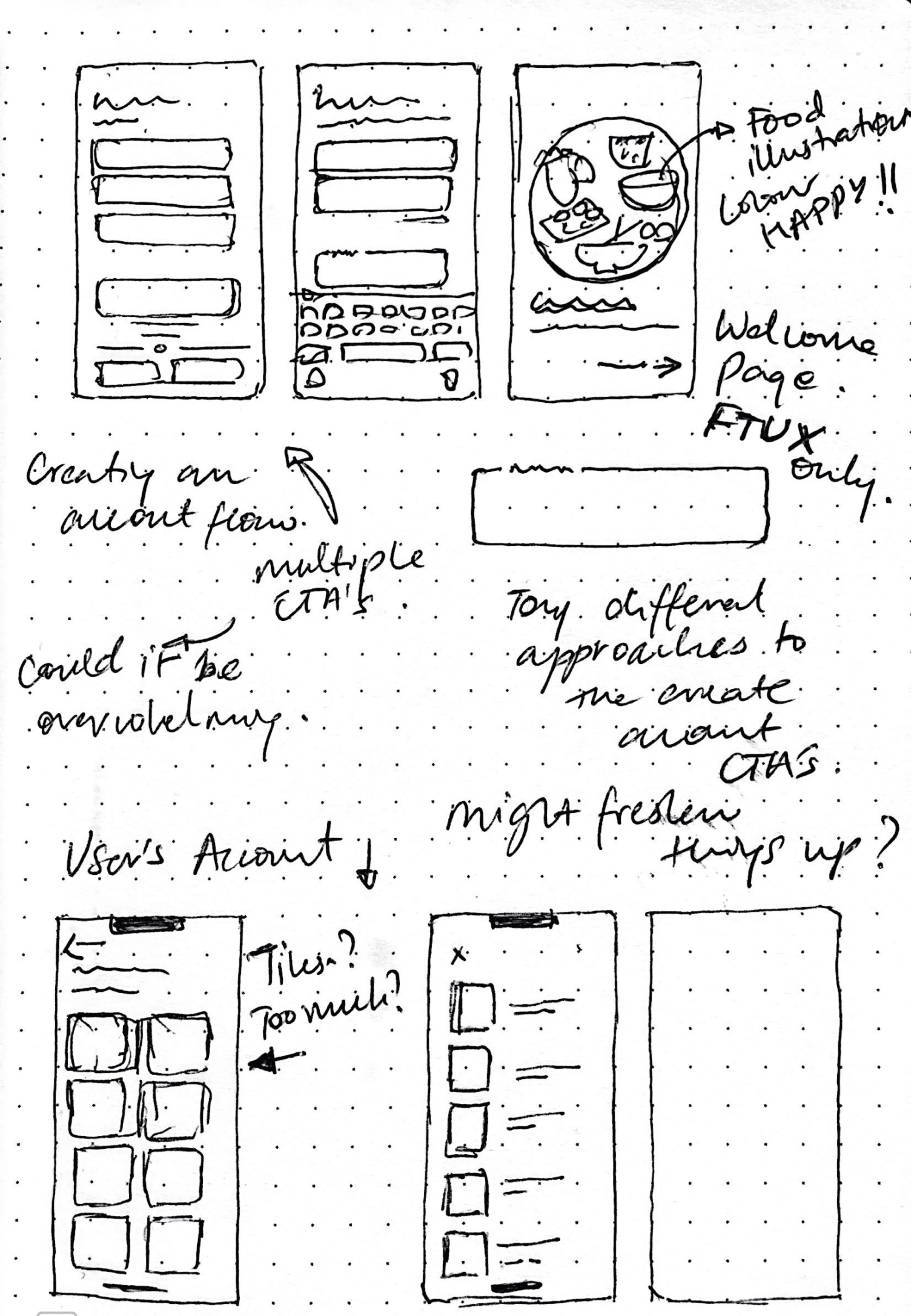
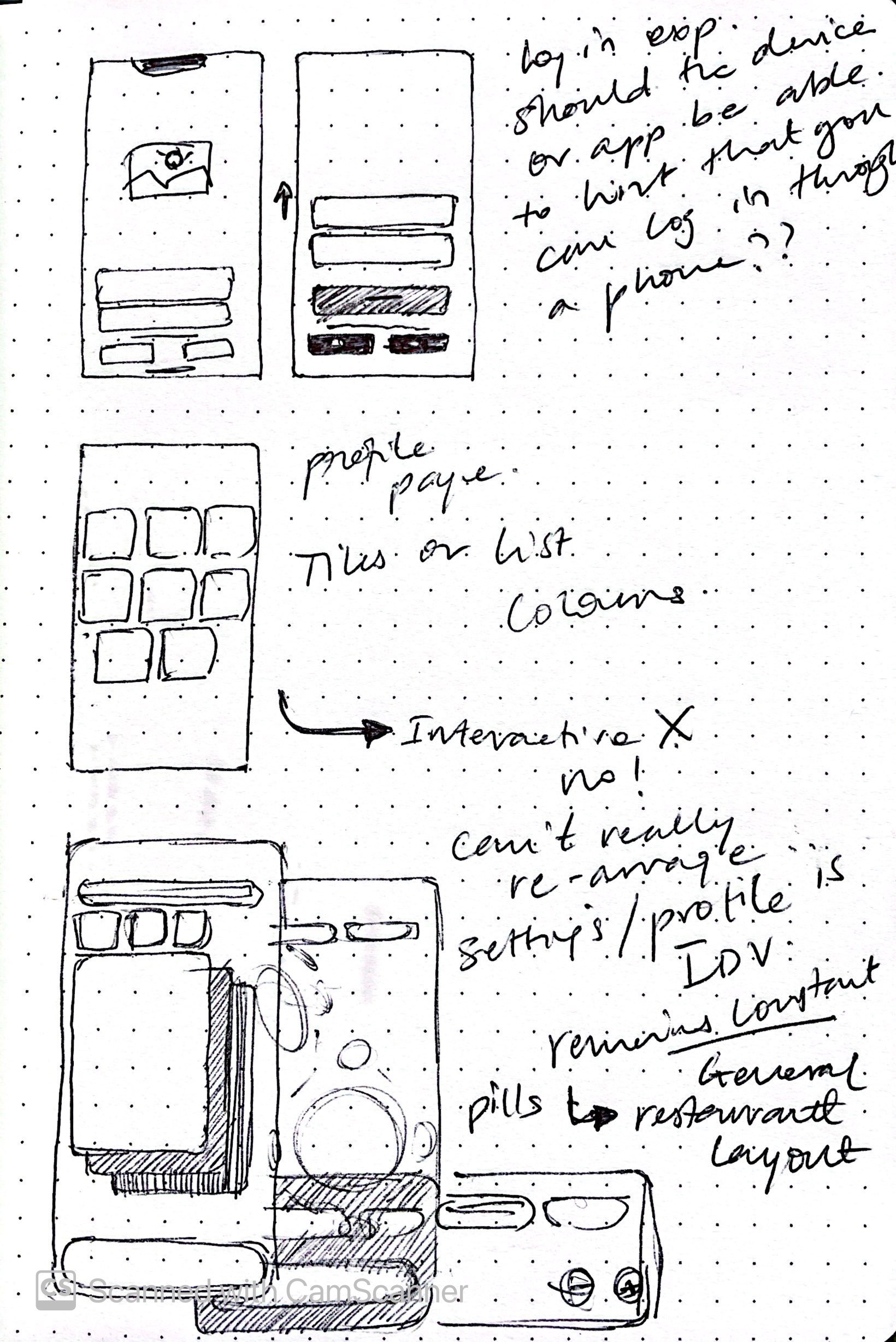
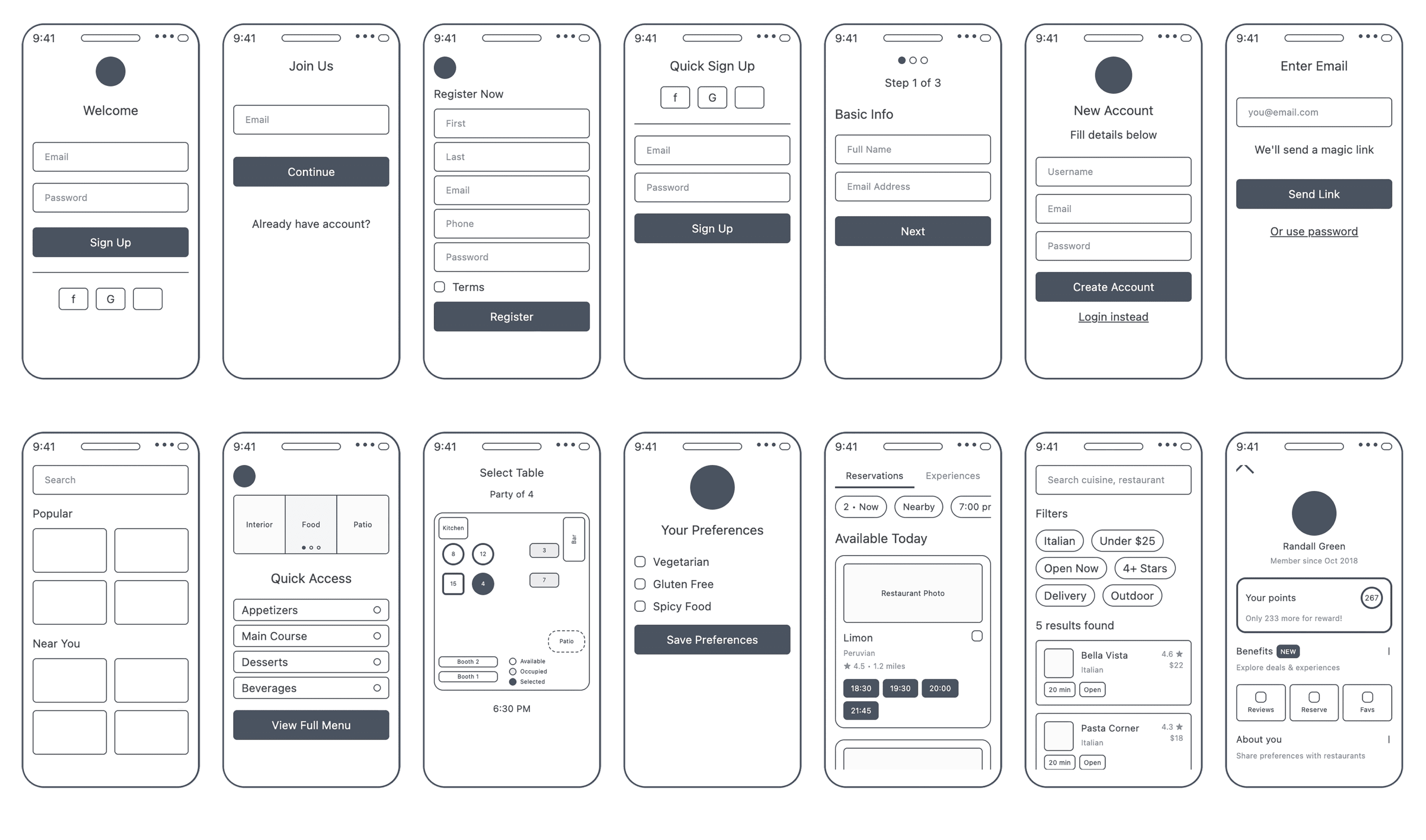
Sketches & Wire Frames
Sketches & Wire Frames
Sketches & Wire Frames
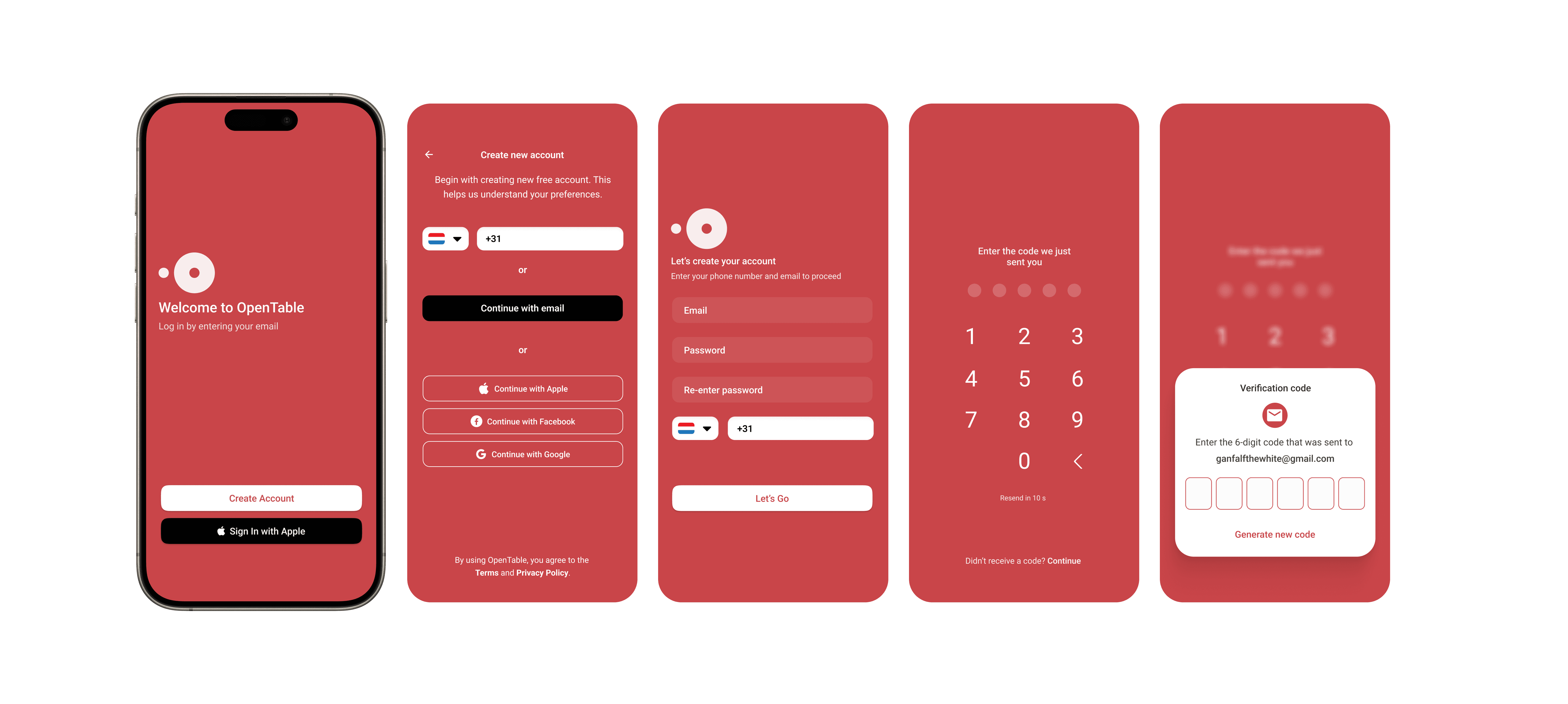
Sign up flow update
Built for easy sign up via any social channels, sticking with the red as it has great contrast and makes the white CTA's pop. The code sign up makes it rudimentary and easy to complete, it also helps users return later to complete onboarding.
Color Palette
I decided to stay true to OPTB's color palette as it is extremely lively and fresh. It just needed to be applied tastefully.
Final Flow
Learnings & Next Steps
Learnings & Next Steps
Learnings & Next Steps
This exercise pushed me to rethink how much information is truly essential on each screen. I learned to strip away visual noise, emphasize function over form, and create space through better structure, not just whitespace. Designing with a minimalist mindset was challenging but rewarding, especially when optimizing for a native app experience.
More importantly, I sharpened my ability to design with intent, anchoring decisions in UI best practices like visual hierarchy, feedback loops, and intuitive navigation. This case study was as much about visual refinement as it was about retention strategy, and I'm walking away a stronger, more thoughtful designer for it.
Keep it simple
Keep it simple
Don’t over complicate
things
Don’t over complicate
things
Use all the space
available
Use all the space
available
Extend to the edges
Extend to the edges
Less is more
stay classy
Less is more
stay classy
Think minimal
Think minimal
Keep essentials visible
and structured.
Keep essentials visible
and structured.
Maintain Visual Hirearchy
Maintain Visual Hirearchy
I now hope I can bring these learnings to a team that values impact through simplicity. While I worked on the project it was nice to see that Open Table themselves decided to put the product through a refresh and many of the decisions I made were replicated in the new version of the app and web experience.
I now hope I can bring these learnings to a team that values impact through simplicity. While I worked on the project it was nice to see that Open Table themselves decided to put the product through a refresh and many of the decisions I made were replicated in the new version of the app and web experience.
© Deven Khatri. 2025
all rights reserved
© Deven Khatri. 2025
all rights reserved
Reach out to me on Linkedin
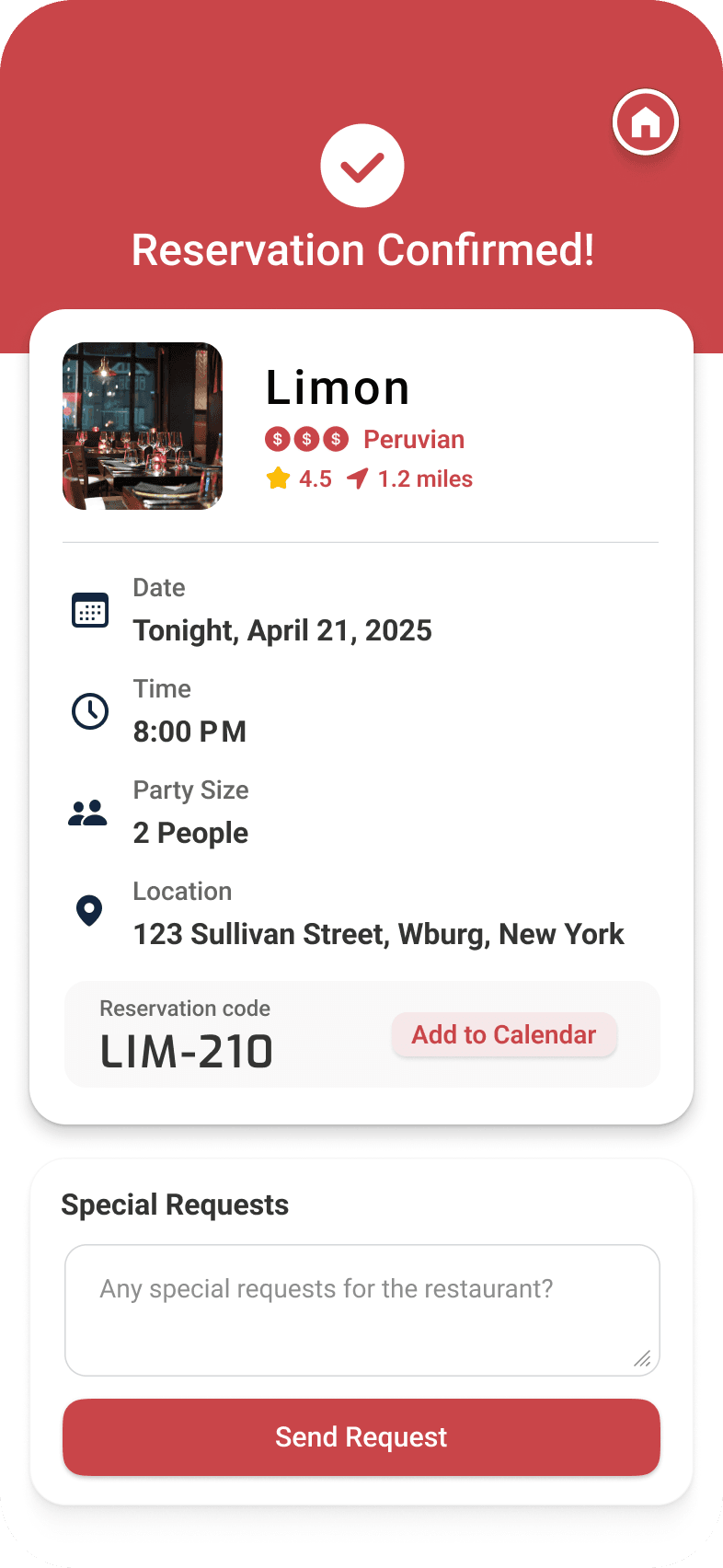
Limon
Limon
4.5
4.5
(378 Reviews)
(378 Reviews)
Mon - Sun: 11:00 AM - 10:30 PM
Mon - Sun: 11:00 AM - 10:30 PM
Peruvian
Peruvian
Today
Today
2
2
People
People
7:00 pm
7:00 pm
18:30
18:30
19:30
19:30
20:00
20:00
21:45
21:45
22:00
22:00
19:00
19:00
19:40
19:40
20:15
20:15
21:00
21:00
About
About
Menu
Menu
Reviews
Reviews
Authentic Peruvian cuisine in a cozy atmosphere. Our ceviche is made fresh daily and our seafood is prepared with the finest ingredients.
Authentic Peruvian cuisine in a cozy atmosphere. Our ceviche is made fresh daily and our seafood is prepared with the finest ingredients.
1.2 miles
1.2 miles
Location & Hours
Location & Hours
123 Sullivan Street, Williamsburg, New York
123 Sullivan Street, Williamsburg, New York
Reserve a table
Reserve a table
Reserve
Reserve
Similar Restaurants You Might Like
Similar Restaurants You Might Like
Gustatio
Gustatio
Italian
Italian
4.7
4.7
1.1 miles
1.1 miles
Bennies
Bennies
Italian
Italian
4.7
4.7
1.1 miles
1.1 miles

OpenTable’s shrinking user base reflects deeper challenges in its design and overall experience. The interface required more than a simple visual update; it needed intelligent, user-centered features that evolved alongside its audience’s expectations.
As part of this re-skin, I focused on layering in meaningful functionality alongside a refined interface
. Voice-enabled search with AI assist
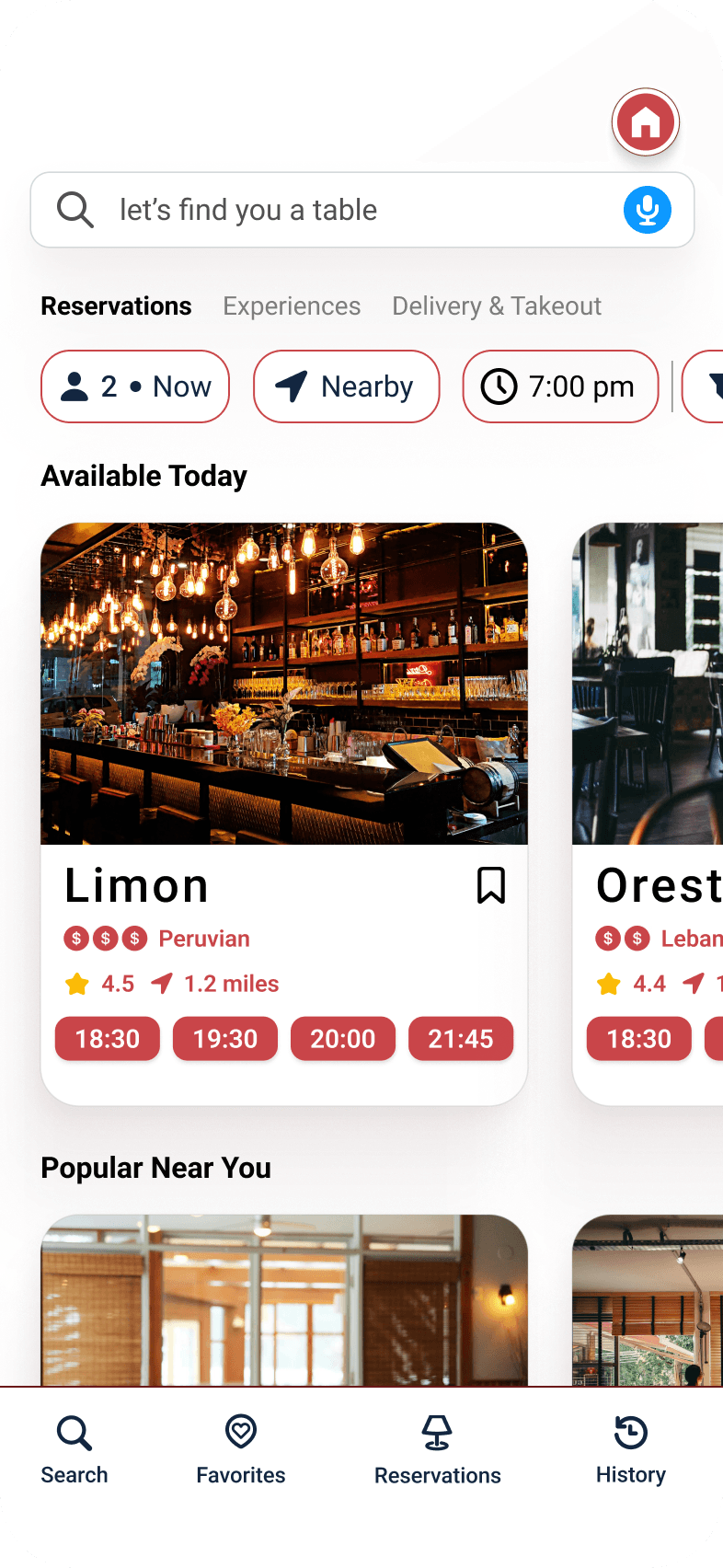
A spotlight search bar with microphone input allows users to quickly find specific restaurants or dishes, hands-free and fast
. Streamlined navigation
A more focused nav bar brings key actions like booking history and reviews to the forefront, reducing friction and cognitive load
. Rebuilt user profile with loyalty mechanics
Introduced a points-based system to the profile hub, encouraging repeat visits and increasing user engagement through personalized incentives
OpenTable’s shrinking user base reflects deeper challenges in its design and overall experience. The interface required more than a simple visual update; it needed intelligent, user-centered features that evolved alongside its audience’s expectations.
As part of this re-skin, I focused on layering in meaningful functionality alongside a refined interface
. Voice-enabled search with AI assist
A spotlight search bar with microphone input allows users to quickly find specific restaurants or dishes, hands-free and fast
. Streamlined navigation
A more focused nav bar brings key actions like booking history and reviews to the forefront, reducing friction and cognitive load
. Rebuilt user profile with loyalty mechanics
Introduced a points-based system to the profile hub, encouraging repeat visits and increasing user engagement through personalized incentives
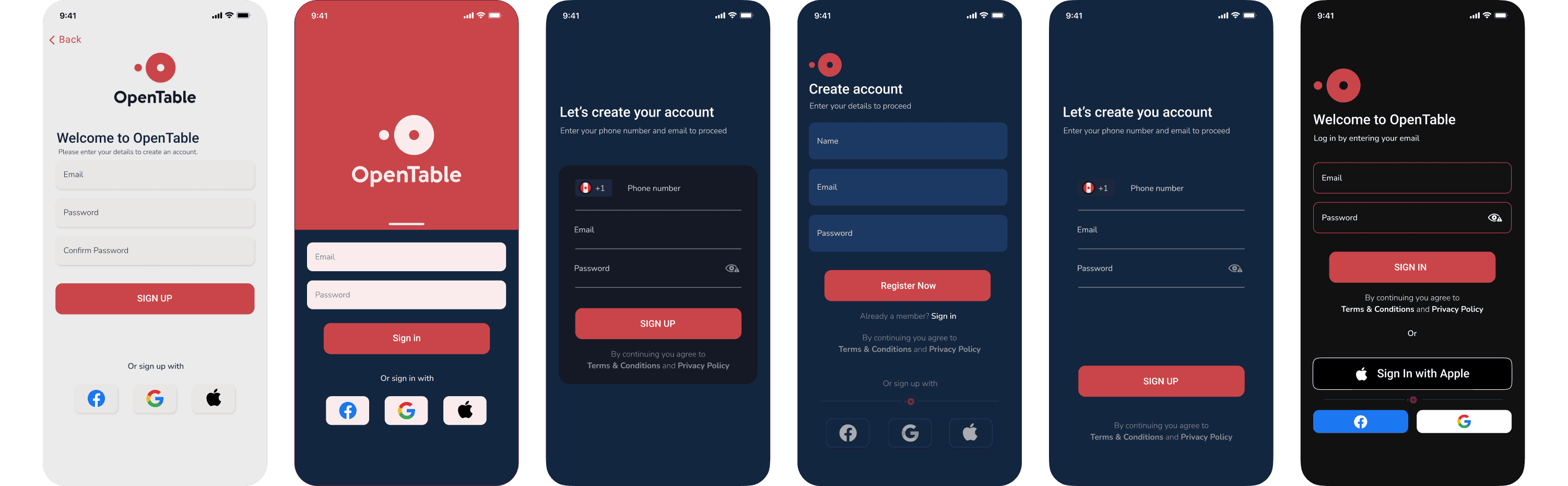
Sign in/ Sign up flow
Refined the layout by adjusting element spacing to a 12pt padding system and explored variations using OpenTable’s diverse color palette for a more engaging and consistent user experience
The sketches helped define a clearer hierarchy and structure for key user flows like onboarding, table reservations, and loyalty perks. With clarity in mind, I moved into wireframing to refine layout, spacing, and usability while preserving the minimalist, reward-centric direction of the redesign.
The sketches helped define a clearer hierarchy and structure for key user flows like onboarding, table reservations, and loyalty perks. With clarity in mind, I moved into wireframing to refine layout, spacing, and usability while preserving the minimalist, reward-centric direction of the redesign.
Streamline the Sign-In/Sign-Up Flow
Simplify the authentication process by making identity verification (IDV) quick, intuitive, and frictionless.
Streamline the Sign-In/Sign-Up Flow
Simplify the authentication process by making identity verification (IDV) quick, intuitive, and frictionless.
Refresh the Color Palette
Update the visual design using OpenTable’s primary brand colours to create a more simplified and cohesive aesthetic for futre operating systems
Refresh the Color Palette
Update the visual design using OpenTable’s primary brand colours to create a more simplified and cohesive aesthetic for futre operating systems
Enhance Restaurant Cards
Redesign the restaurant cards with improved information architecture, allowing users to access key details such as ratings, cuisine, dietary restrictions, availability, and ambiance—at a glance, without needing to open the full profile
Enhance Restaurant Cards
Redesign the restaurant cards with improved information architecture, allowing users to access key details such as ratings, cuisine, dietary restrictions, availability, and ambiance—at a glance, without needing to open the full profile
Sign in/ Sign up flow
Refined the layout by adjusting element spacing to a 12pt padding system and explored variations using OpenTable’s diverse color palette for a more engaging and consistent user experience
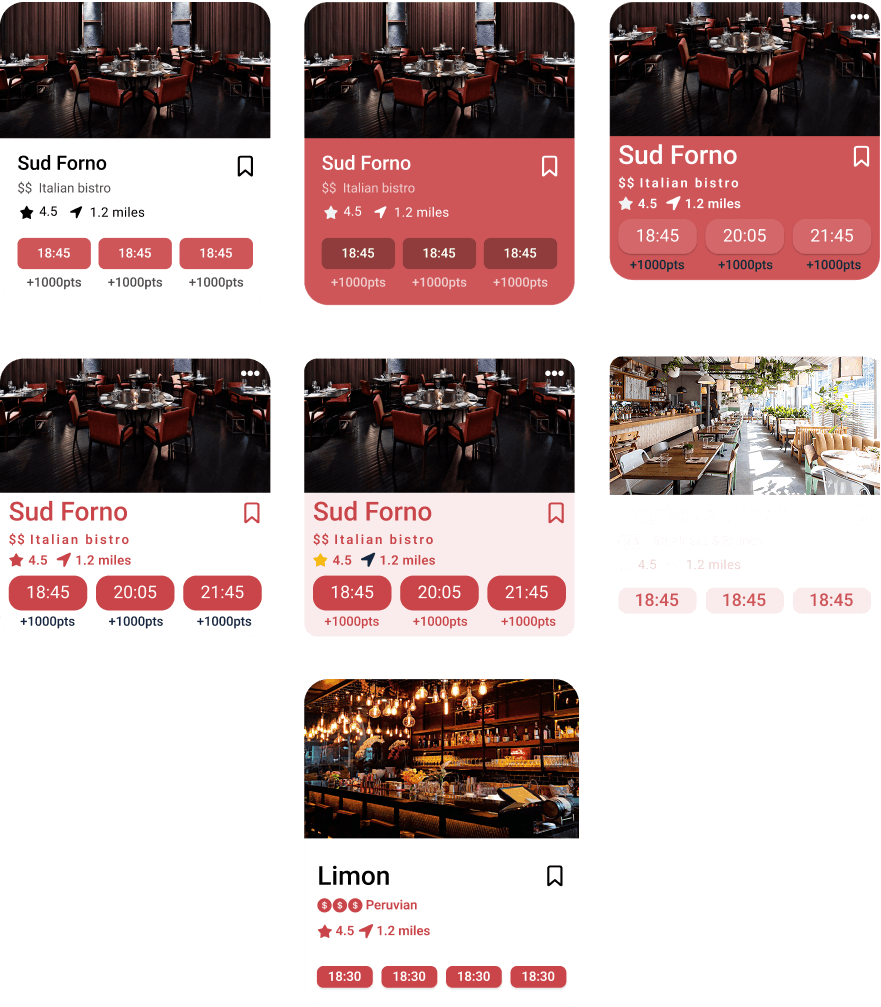
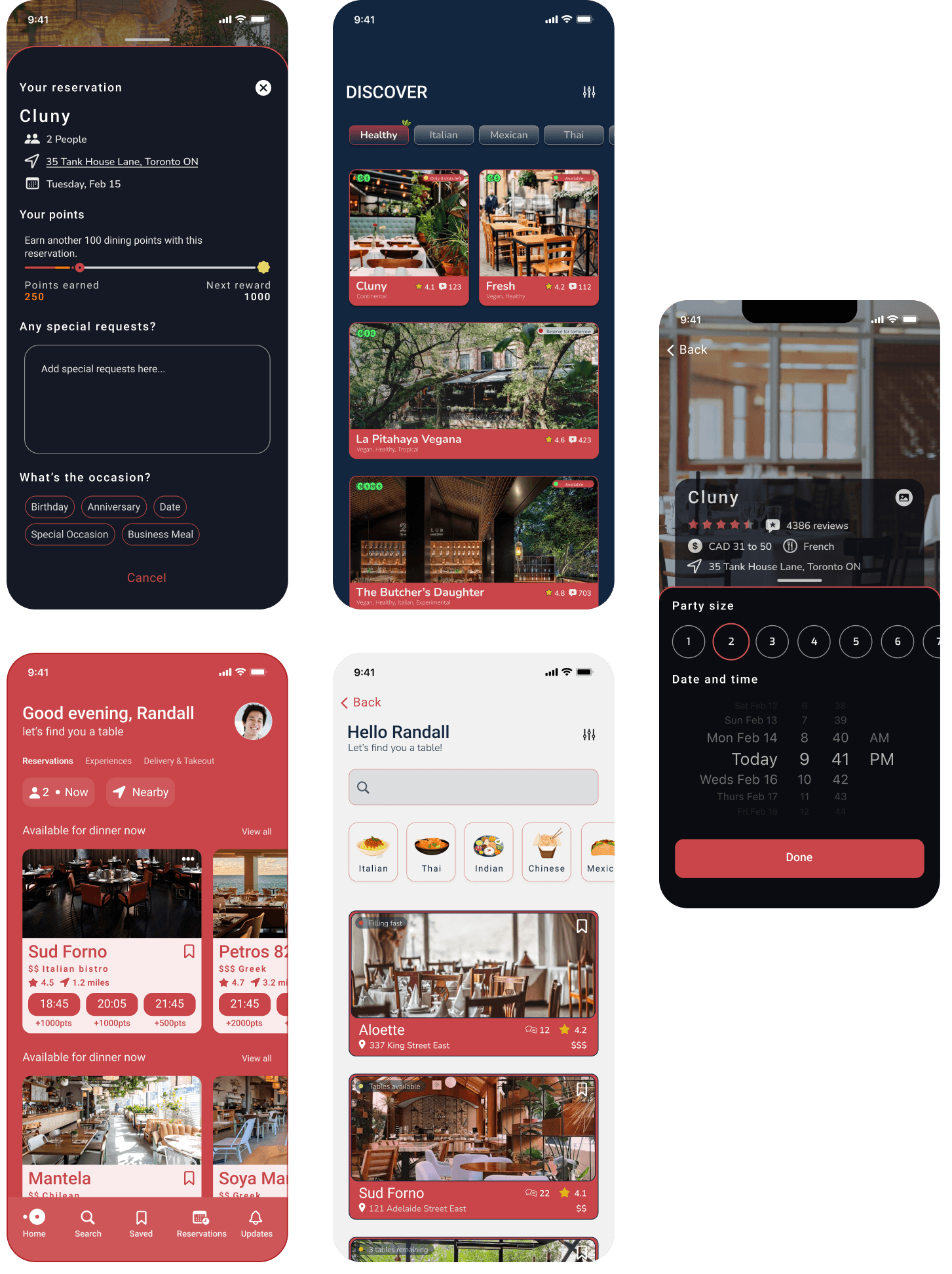
Updated Restaurant Cards
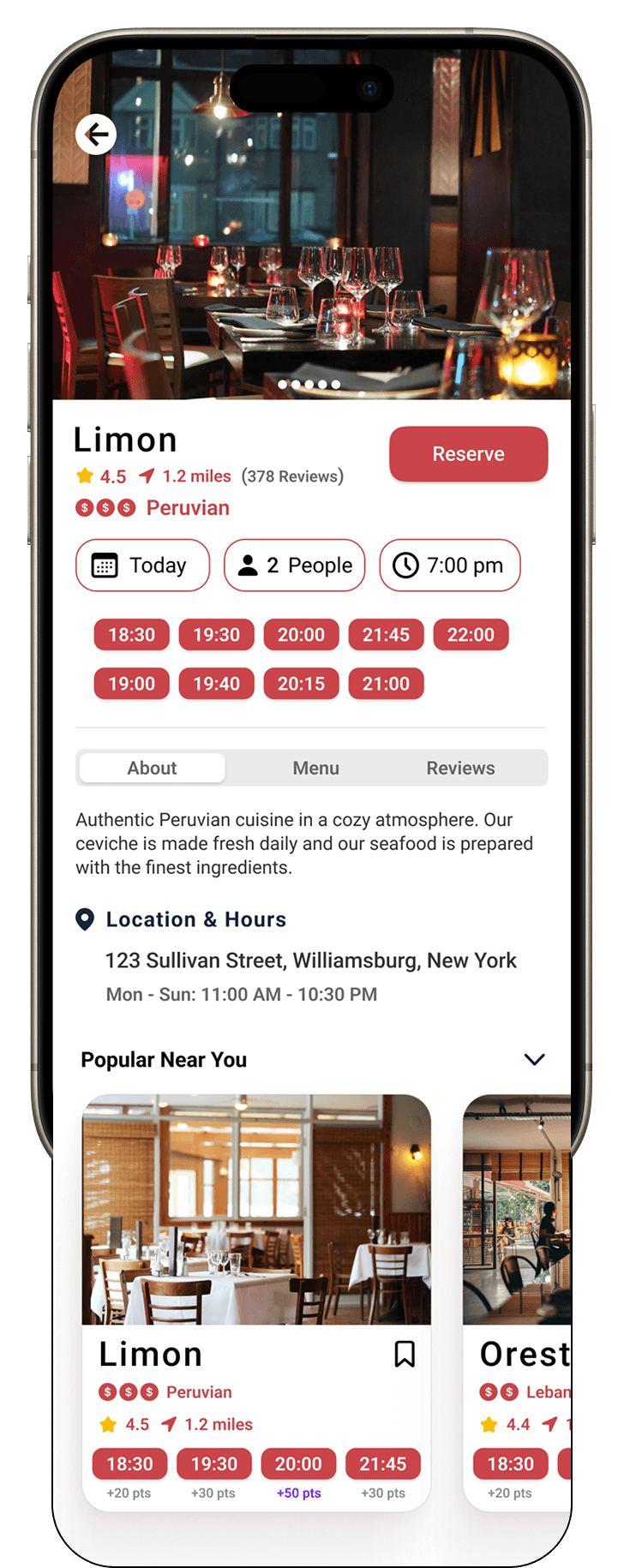
I focused on redesigning the restaurant cards to make the information easy to digest, helping users make decisions faster. Reducing friction was a priority, and I made sure the selection process stayed clear, intuitive, and straightforward.
Updated Restaurant Cards
I focused on redesigning the restaurant cards to make the information easy to digest, helping users make decisions faster. Reducing friction was a priority, and I made sure the selection process stayed clear, intuitive, and straightforward.
Customer accounts and Verification
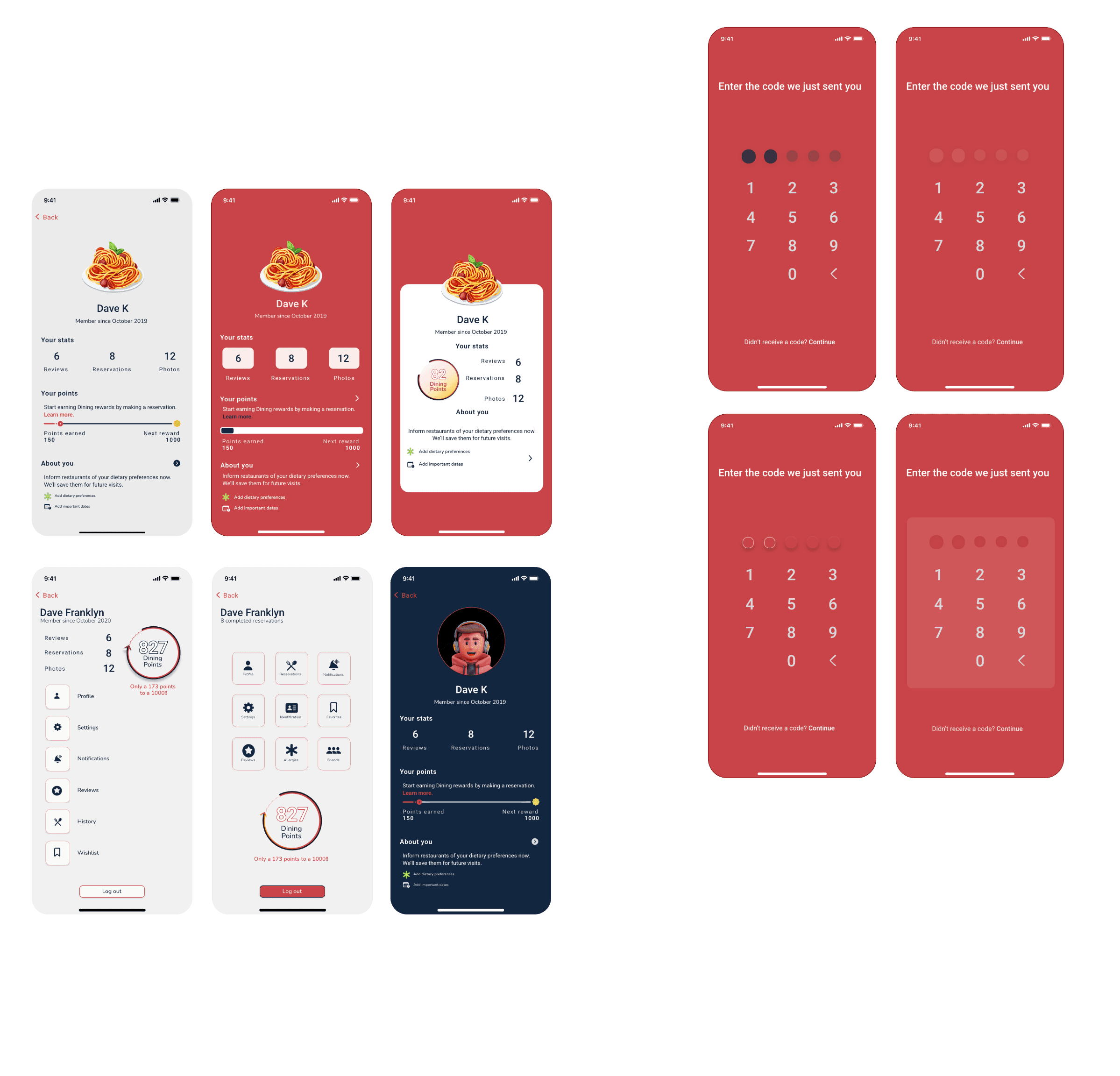
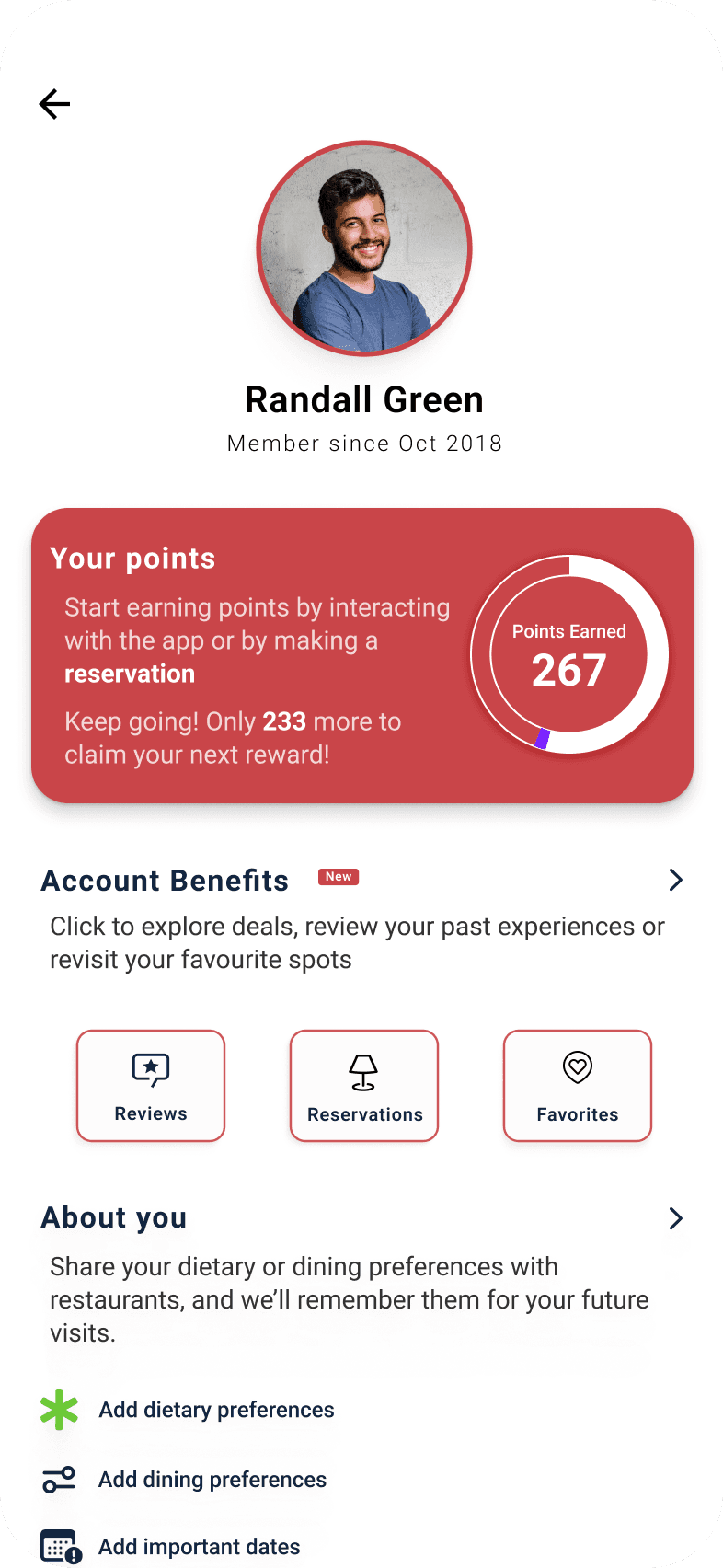
I experimented with several approaches to the customer accounts section, aiming to make it more engaging through subtle gamification. By introducing point management and interactive elements, I can encourage users to explore the section more actively and drive higher NPS scores for OPTB.
I designed the accounts section so users can adjust a wide range of settings, allowing the product to gather richer data and provide smarter, more personalized recommendations.
Customer Accounts and IDV
I experimented with several approaches to the customer accounts section, aiming to make it more engaging through subtle gamification. By introducing point management and interactive elements, I can encourage users to explore the section more actively and drive higher NPS scores for OPTB.
I designed the accounts section so users can adjust a wide range of settings, allowing the product to gather richer data and provide smarter, more personalized recommendations.
Incremental Improvements
OpenTable needed more than just a visual refresh, it needed smarter features that matched the evolving expectations of its users. As part of this re-skin, I focused on layering in meaningful functionality alongside a refined interface
. Voice-enabled search with AI assist
. Streamlined navigation
. Rebuilt user profile with loyalty mechanics



Updated Restaurant Cards
Get details about every restaurant, click on the card to read reviews, view the menu or reserve a table
Experiences
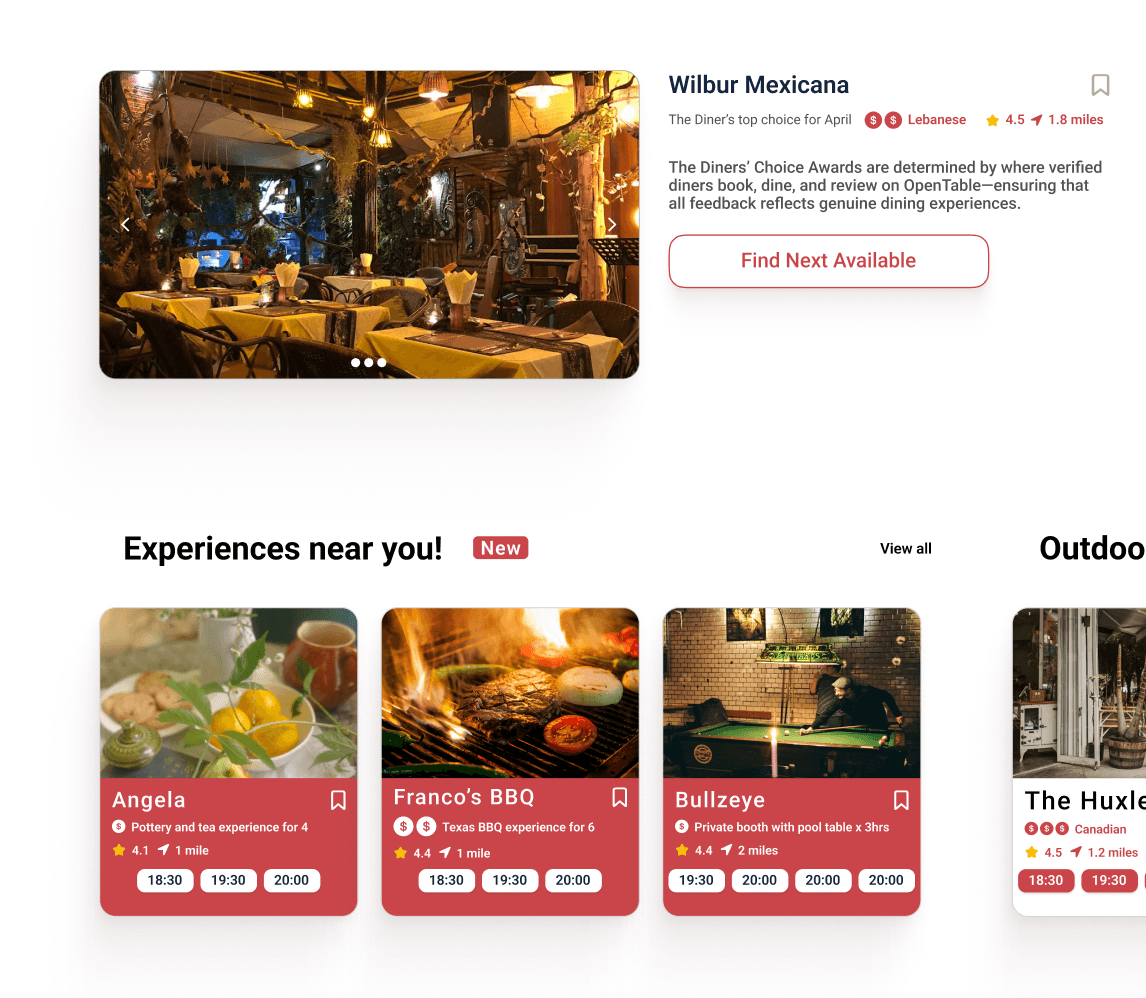
Browse dozens of professionally tailored experiences. Group bookings just got simpler
Experiences
Browse dozens of professionally tailored experiences. Group bookings just got simpler
Updated Restaurant Cards
Get details about every restaurant, click on the card to reserve
Updated Restaurant Cards
Get details about every restaurant, click on the card to read reviews, view the menu or reserve a table
Experiences
Browse dozens of professionally tailored experiences. Group bookings just got simpler
Experiences
Browse dozens of professionally tailored experiences. Group bookings just got simpler
Updated Restaurant Cards
Get details about every restaurant, click on the card to reserve
.Simplify sign-up
.Enable native sign-in
.Gamify customer accounts
.Streamline cards
.Boost interactivity
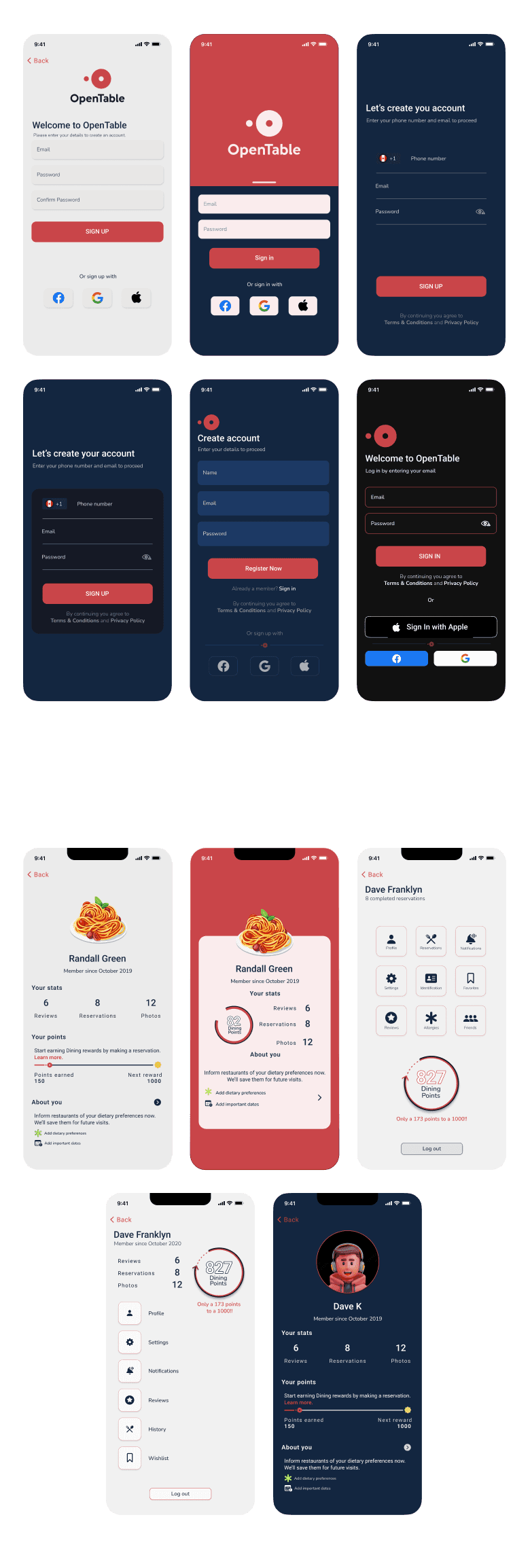
Sign in/ Sign up flow
Refined the layout by adjusting element spacing to a 12pt padding system and explored variations using OpenTable’s diverse color palette for a more engaging and consistent user experience
Updated Restaurant cards
I focused on redesigning the restaurant cards to make the information easy to digest, helping users make faster. Reducing friction was a priority, and I made sure the selection process stayed clear, intuitive, and straightforward.
Customer accounts and Verification
I experimented with several approaches to the customer accounts section, aiming to make it more engaging through subtle gamification. By introducing point management and interactive elements, I can encourage users to explore the section more actively and drive higher NPS scores for OPTB.
Sign up flow update
built for easy sign up via any social channels, sticking with the red as it has great contrast and makes the white CTA's pop. The code sign up makes it rudimentary and easy to complete, it also helps users return later to complete onboarding.
Color Palette
I decided to stay true to OPTB's color palette as it is extremely lively and fresh. It just needed to be applied tastefully.